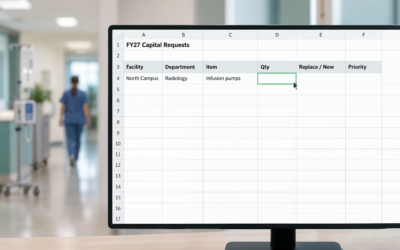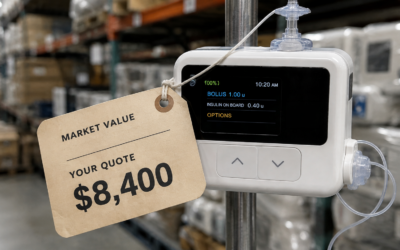
72% of health system supply chain executives say supply chain doesn’t formally govern their approach to capital equipment management. In our experience, that leads to a lack of early visibility and control, which is how requests reach Sourcing with the model, the vendor and the opening price already set.
Take a typical equipment purchase. An imaging department needs a new ultrasound. A sales rep the team already knows brings the newest model in for a demo. The clinicians like it, and the rep sends a quote. The quote goes into the capital request, the committee approves the amount, and the request moves to Sourcing.
By the time Sourcing opens the request, the model, the vendor, the configuration and the budget are all set. The opening price came from the vendor. An equipment planner at a North Carolina health system described the same pattern to Healthcare Purchasing News: “Too often, Supply Chain is the last in the food chain to know that a capital request is happening.”
And when Supply Chain is the last to know, outcomes get harder to achieve and satisfaction with the capital approach suffers.
Who governs capital equipment
This summer, Eric O’Daffer Healthcare Advisory asked 60 health system supply chain executives who governs capital equipment at their organizations. 28% said supply chain formally governs it. The other 72% chose one of three answers: supply chain influences sourcing decisions but doesn’t own capital strategy or outcomes (40%), governance is shared with no clear owner (23%), or individual departments mostly manage it (8%).
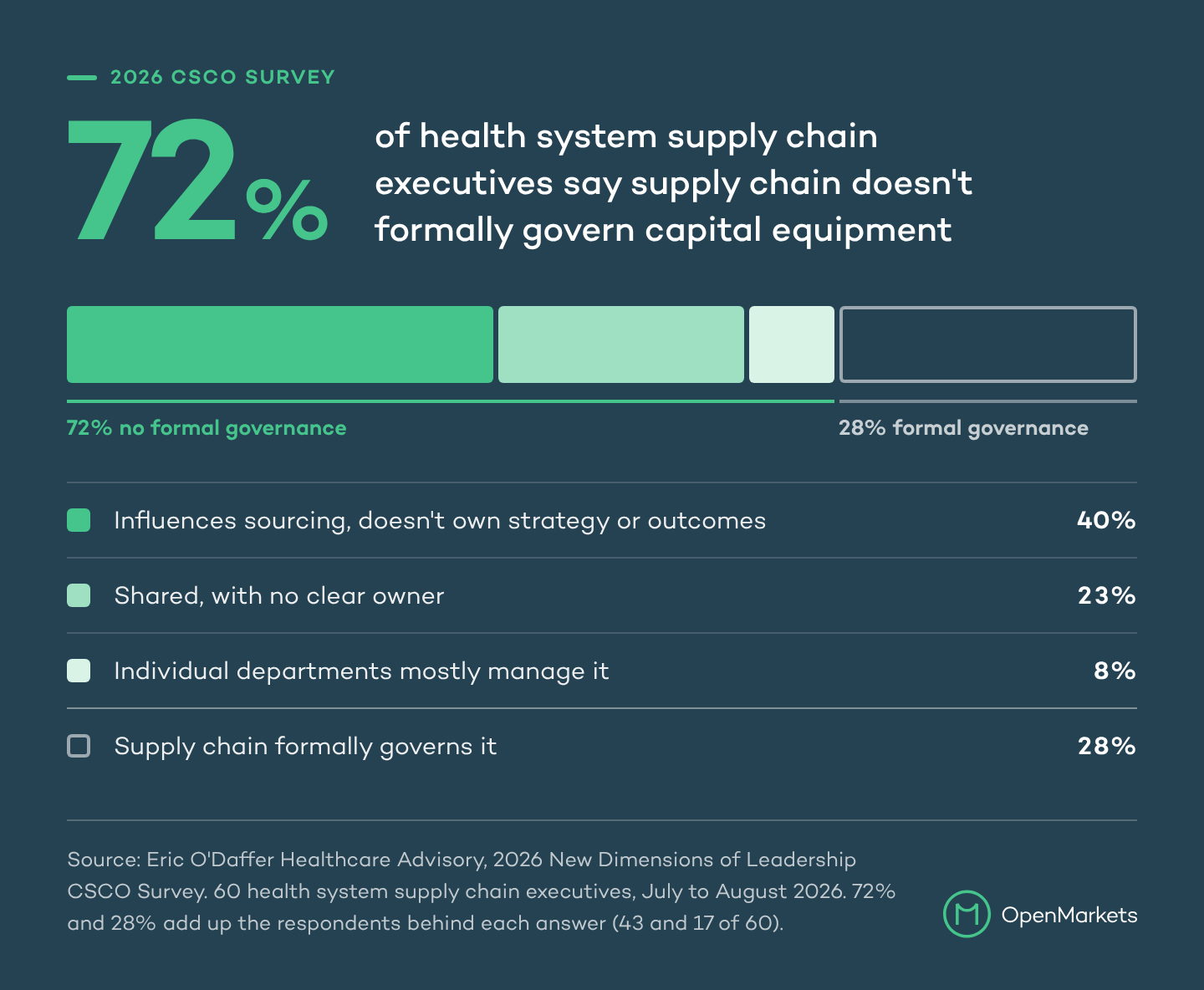
That 28% includes just 5% who said supply chain has enterprise-wide accountability for capital equipment, from planning and purchasing through use, lifecycle management and financial performance.
When Sourcing sees the request
Sourcing leaders we work with are measured on savings, cost avoidance, and contract use. Most of what they can do to move those numbers works best before anyone picks a model. In a purchase like the ultrasound, that moment has passed by the time the request arrives.
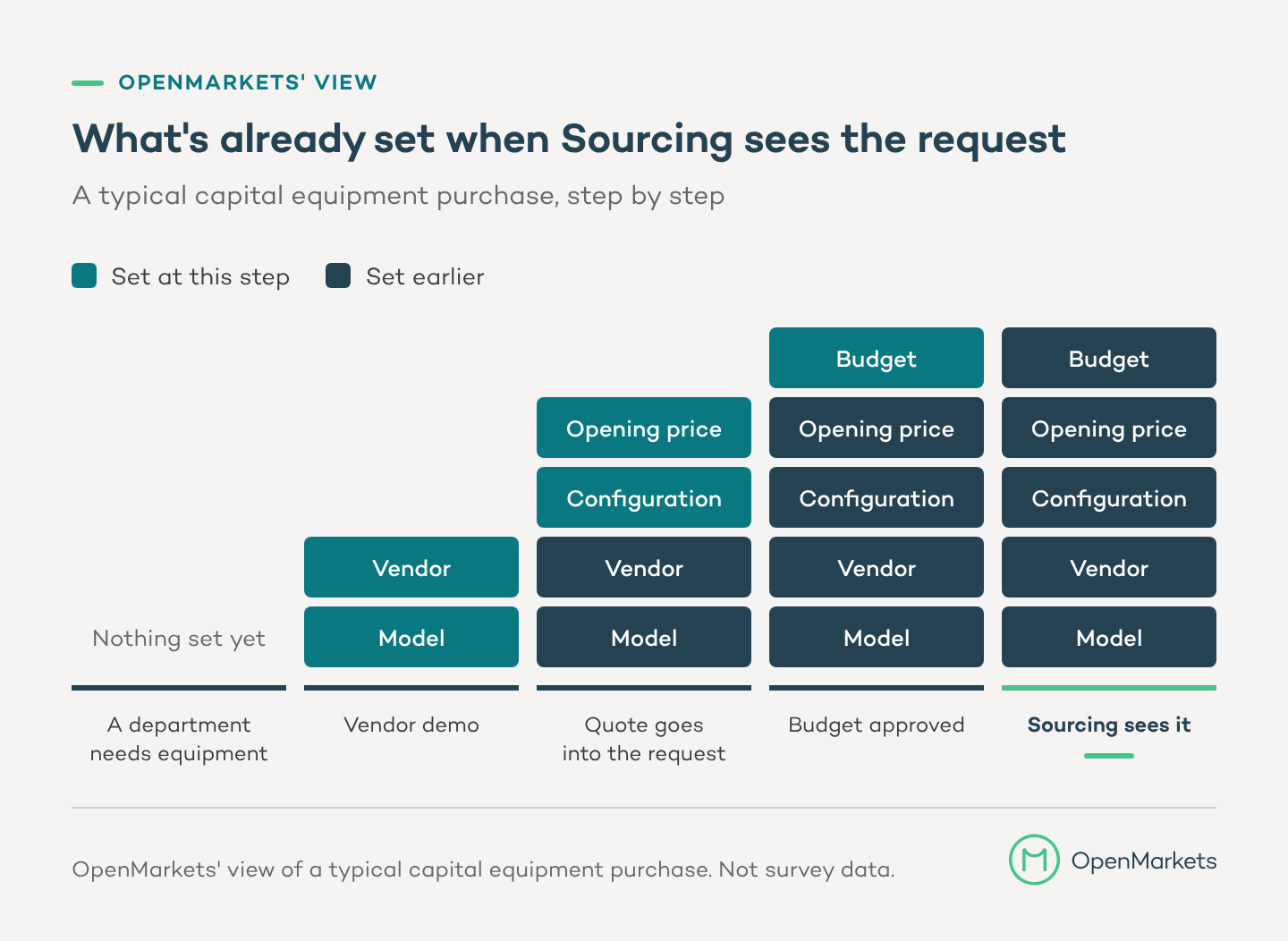
For organizations with Supply Chain at the end of the capital process, price is the only option still fully open after the quote. After budget approval, comparing other models is off the table and the other three are harder.
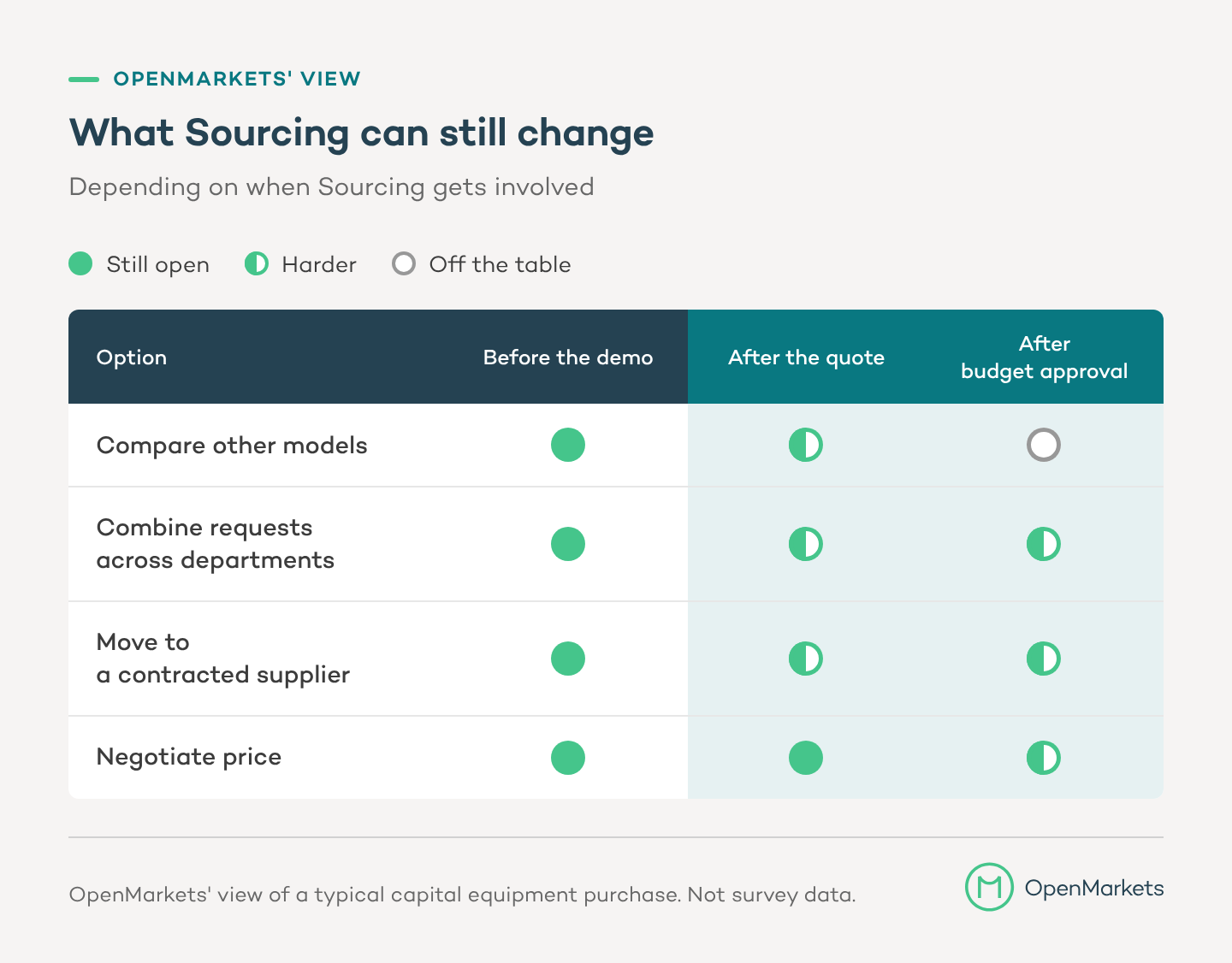
Comparing other models gets hard once clinicians have tried one and a quote is attached. Raising a second option at that point can read as second-guessing the department, and the timeline may not leave room for a fair trial.
Combining requests depends on seeing them at the same time. When two departments ask for the same exam table three months apart, each request can arrive as its own deal and get priced on its own.
Moving to a contracted supplier gets harder once the quote comes from someone else. Sometimes the contract already exists, and the department didn’t know about it when it called the rep. Even price gets harder after approval, because the approved amount becomes the number everyone plans around.
Small teams, focused on sourcing and contracting
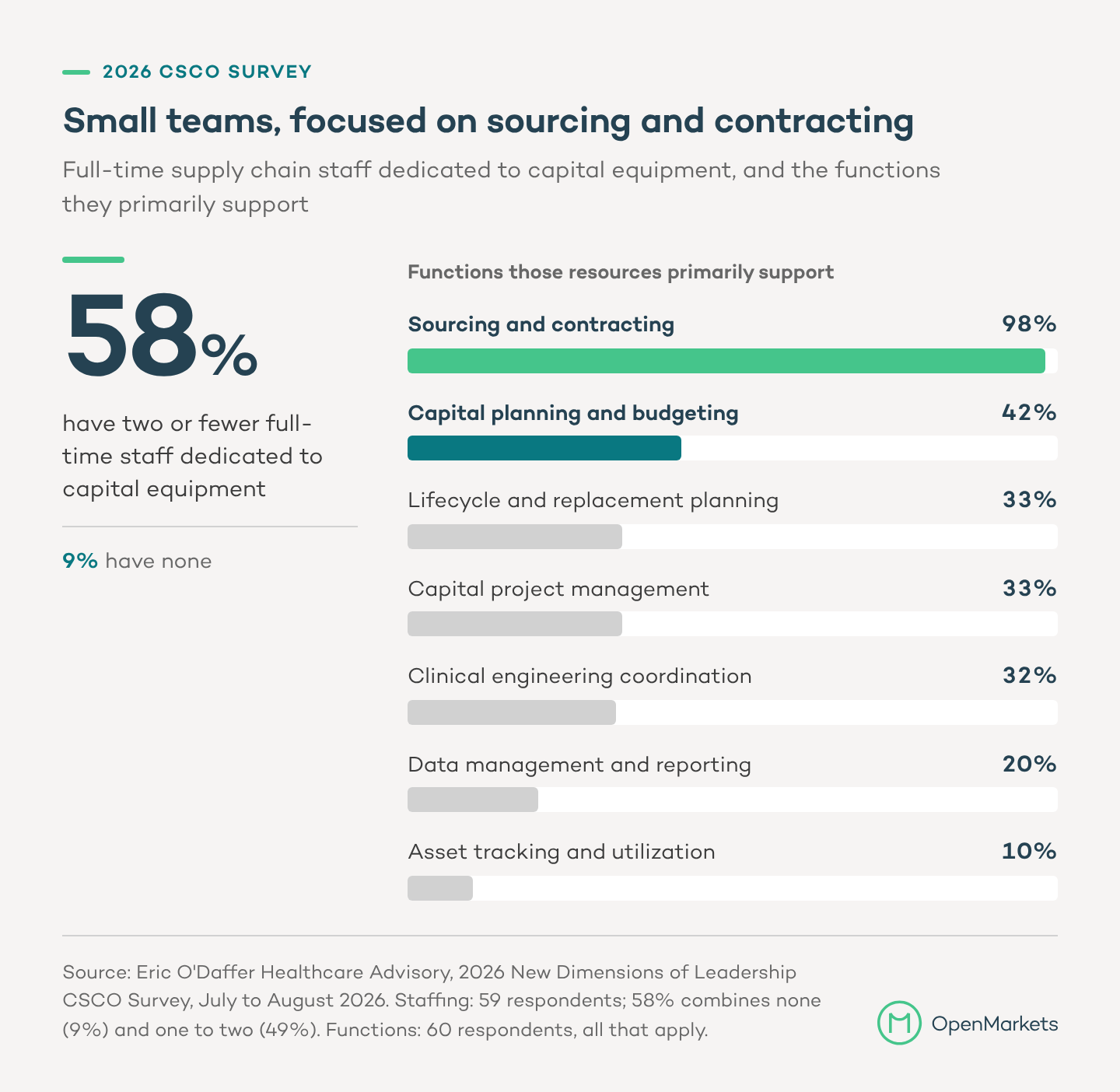
Most of the teams in the survey are small, with 58% indicating their supply chain has two or fewer full-time staff dedicated to capital equipment, and 9% indicating they have none. Asked which functions their capital equipment resources primarily support, 98% named sourcing and contracting. 42% named capital planning and budgeting.
Mostly manual or reactive
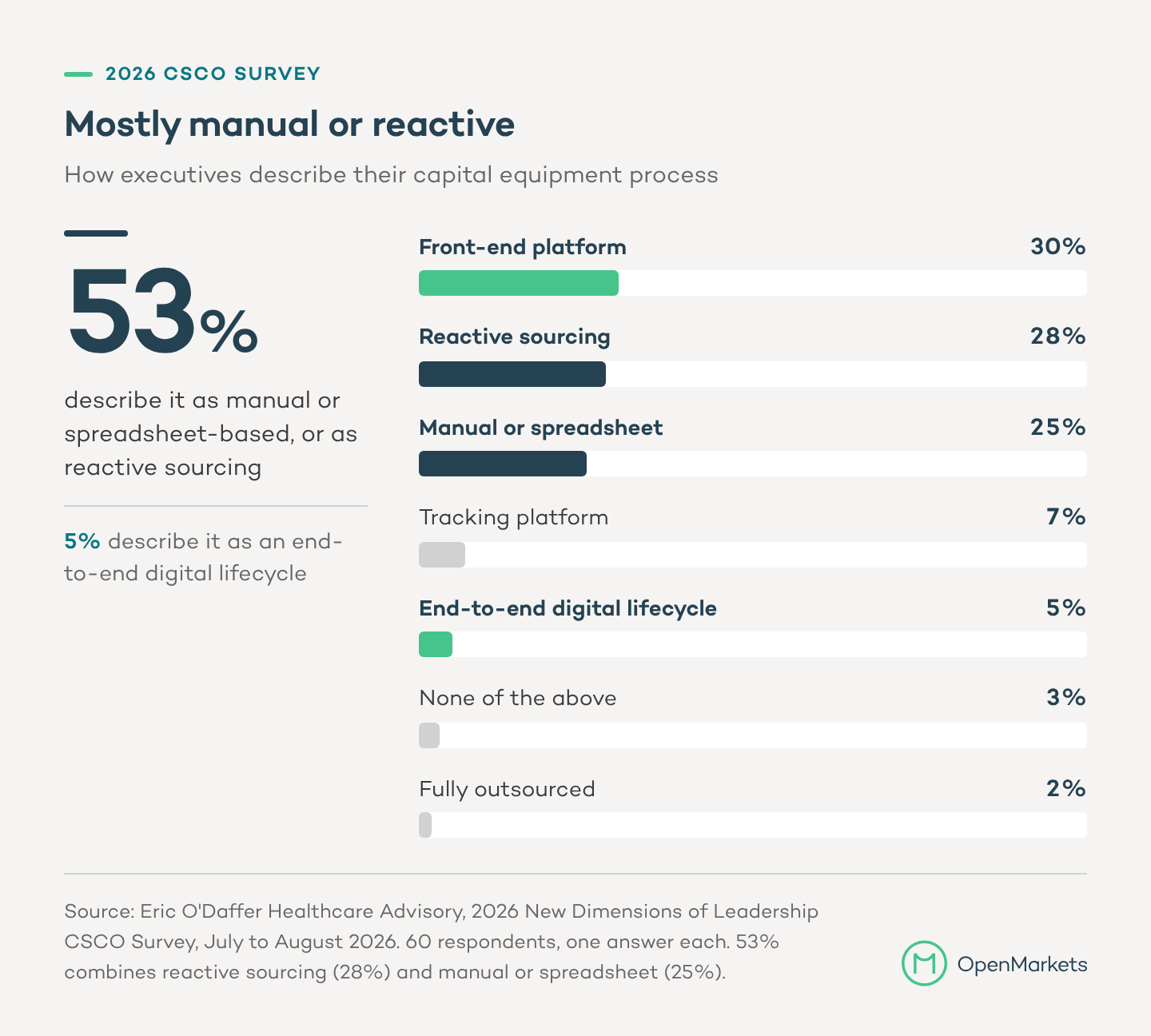
53% describe their capital equipment process as manual or spreadsheet-based, or as reactive sourcing. Only 5% describe it as an end-to-end digital lifecycle.
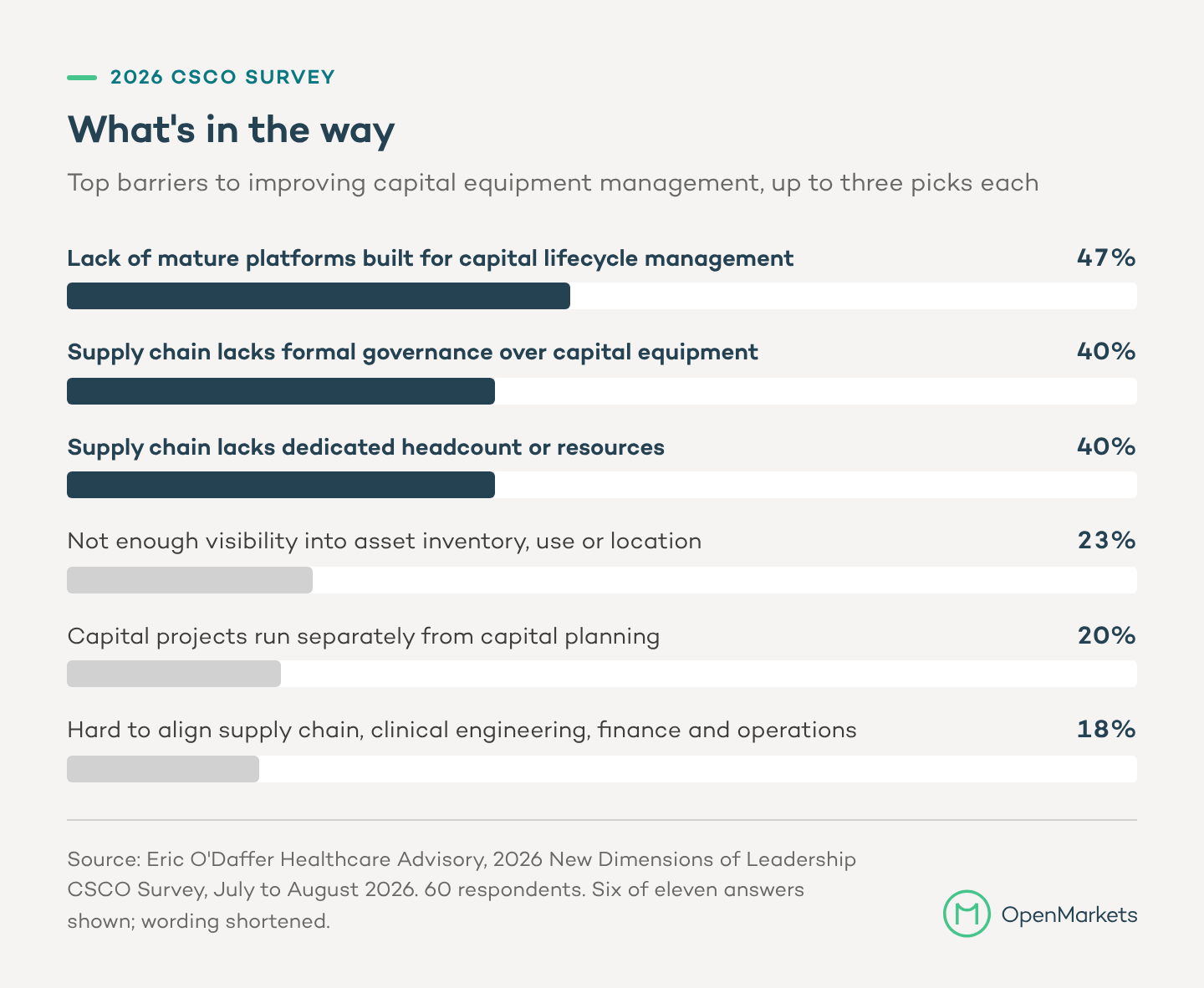
Asked what keeps them from improving it, executives most often named the lack of mature technology platforms built for capital lifecycle management (47%), supply chain’s lack of formal governance over capital equipment (40%) and not enough dedicated staff or resources (40%).
Meanwhile, according to the Healthcare Financial Management Association (HFMA), health system capital spending has surged. Among the nonprofit hospitals and health systems Fitch rates, the median ratio of capital spending to depreciation reached 142.7% in fiscal 2025, up from 123.4% a year earlier and the highest since fiscal 2008. That ratio covers all capital spending; equipment is one part of it. In our experience, the later Sourcing hears about an equipment request, the more the purchase comes down to price and the harder it is to drive savings and stretch the dollars.
Four ways to bring Sourcing in sooner
Every option in the “What Sourcing can still change” chart is open before the demo. These changes help Sourcing see a request at that point.
- One front door for equipment requests. Every request starts in the same place, and Sourcing can see it the day it’s entered, before the first vendor call.
- Start from the approved list. When requesters can see the models the health system has already standardized on, the first conversation starts there. The rep’s newest model becomes one option among several.
- Keep next year’s requests where Sourcing can see them. Capital plans kept in department spreadsheets reach Sourcing one request at a time. Kept in one place, the same request from two departments can be sourced as one event. We wrote about why plans stay in spreadsheets in Nobody plans in a spreadsheet by choice.
- Let Sourcing support quoting. Chasing quotes is work most clinicians shouldn’t be doing. When Sourcing provides more support, it sets the terms of the comparison, and the department gets its time back. We wrote about how quote chasing lands on clinicians in We turned our clinicians into part-time buyers.
Where OpenMarkets fits
OpenMarkets takes the capital plan, the requests and the quotes and pulls them together in one place, so Sourcing sees a need from the first ask. See how it works in Formulary and CapConnect.
Sources
- Eric O’Daffer Healthcare Advisory, “2026 New Dimensions of Leadership: Healthcare Chief Supply Chain Officer Survey.” 60 health system supply chain executives, fielded July to August 2026.
- Rich Daly, “Capex surges to highest since 2008,” HFMA, August 11, 2026, reporting Fitch Ratings’ 2026 median ratios for not-for-profit hospitals and health systems.
- Rick Dana Barlow, “Fine print’s bottom line,” Healthcare Purchasing News, October 24, 2017.
Charts marked OpenMarkets’ view show how a typical capital equipment purchase runs in our experience. Survey figures that combine answers add up the respondents behind each reported share, so they can differ by a point from the sum of the rounded shares.